Nicéphore Niépce
1765–1833 · France
Making light endure.
Explore 3 works ↓Life and work ↓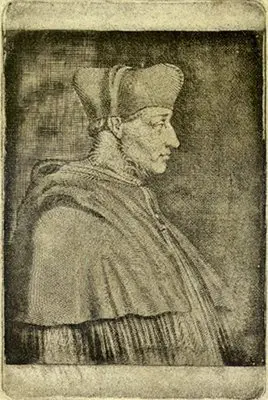
Nicéphore Niépce · 1827
http://www.hrc.utexas.edu/exhibitions/permanent/wfp/heliography.html
Public domain · Artwork record
A journey through images.
Available photographs can be enlarged.
Work and source
Referenced work : Point de vue du Gras — héliographie, vers 1827 · 1827 · Nicéphore NiépceOfficial work ↗Work and source
Referenced work : Un cheval avec son conducteur — héliogravure d’après une gravure · 1825 · Nicéphore NiépceOfficial work ↗Each photograph links to its portfolio or collection record. Titles, dates and credits are retained when supplied by the source.
View from the Window at Le Gras is the only known and documented camera view by Niépce. The other images shown are heliographic prints: reproductions of engravings made with his photographic process. The body of work at the Musée Nicéphore Niépce
The story
Niépce sought to fix images produced by the camera obscura and developed heliography, a process based on bitumen’s sensitivity to light. His Point de vue du Gras, made in the 1820s, is among the earliest surviving photographic images. He entered a partnership with Louis Daguerre in 1829. His career reminds us that photography emerged through successive material experiments rather than an instantaneous invention.
Understanding the work
Observe the plate as an object as much as a view: uncertain contrasts, the metallic surface and exposure time are part of what the image teaches us.
Key works and series
Point de vue du Gras; heliographic research.