John Murray
1809–1898 · United Kingdom
The architecture of Agra through the paper negative.
Life and work ↓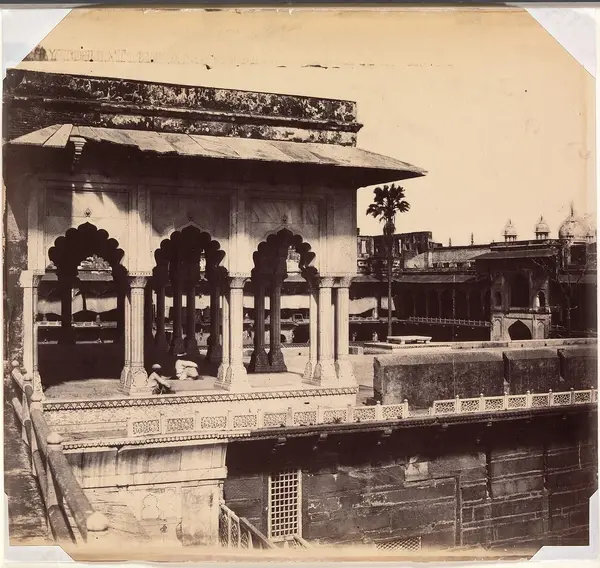
John Murray · 1862–64
The Metropolitan Museum of Art · Purchase, Cynthia Hazen Polsky Gift, 1988
CC0 — domaine public · Reuse conditions · Artwork record
The story
John Murray was a British photographer whose work in India included highly precise architectural views. The Met preserves his studies of the palace at Agra. The selection presents a building through the relationship between pavilion, terrace and courtyard: photography organizes masses and openings while preserving the information needed to read the site.
The selection preserved at the Metropolitan Museum of Art allows one work to be examined: The Diwan-i Khas from the Mussaman Burj, Agra Palace. The records identify the following techniques: Albumen silver print from paper negative. This information distinguishes the moment of exposure, the process and the preserved object.
Understanding the work
Observe the difference between solid surfaces and openwork bays. The terrace lines lead towards the pavilion, while light reveals details in the stone.
Key works and series
The Diwan-i Khas from the Mussaman Burj, Agra Palace (1862–64). The museum records specify each print’s process, dimensions, provenance and accession number.