Hippolyte Bayard
1801–1887 · France
Inventing, then staging.
Explore 9 works ↓Life and work ↓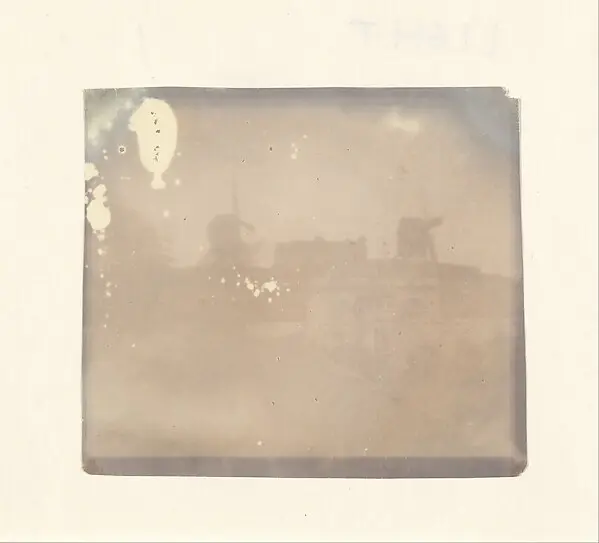
Hippolyte Bayard · 1839
The Metropolitan Museum of Art — Gilman Collection, Gift of The Howard Gilman Foundation, 2005
CC0 — The Metropolitan Museum of Art · Reuse conditions · Artwork record
A journey through images.
Available photographs can be enlarged.
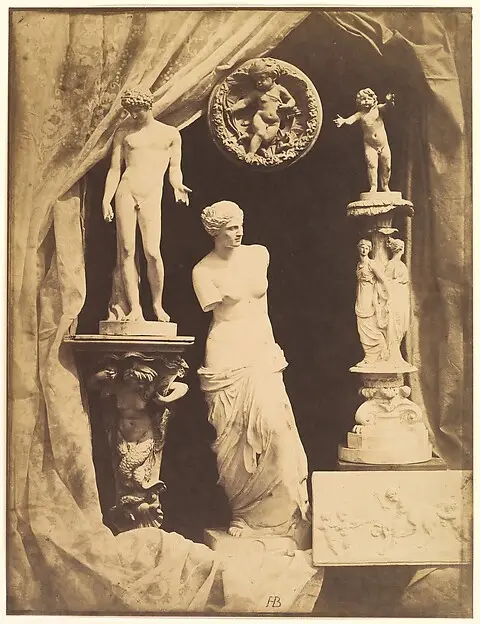
Hippolyte Bayard · Early 1850s
The Metropolitan Museum of Art — Gilman Collection, Purchase, William Talbott Hillman Foundation Gift, 2005
CC0 — The Metropolitan Museum of Art · Reuse conditions · Artwork record
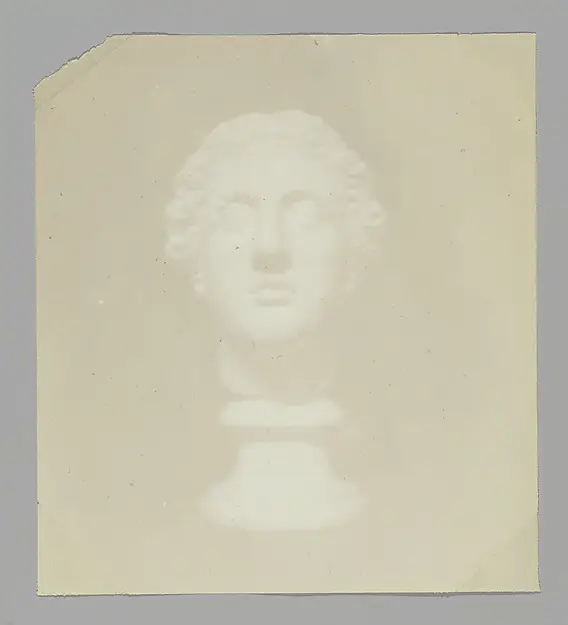
Hippolyte Bayard · probably 1839
The Metropolitan Museum of Art — The Horace W. Goldsmith Foundation Fund, through Joyce and Robert Menschel, 2019
CC0 — The Metropolitan Museum of Art · Reuse conditions · Artwork record
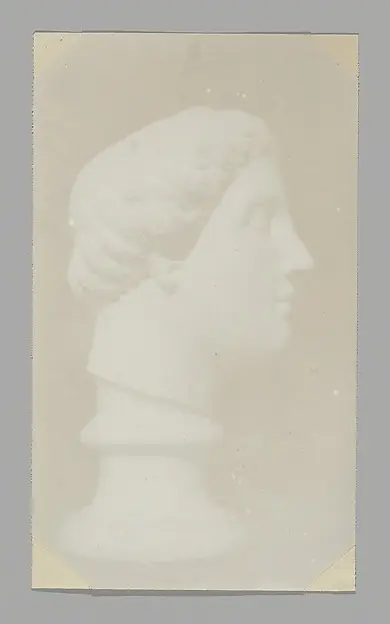
Hippolyte Bayard · probably 1839
The Metropolitan Museum of Art — Gift of Hans P. Kraus Jr., in celebration of the Museum’s 150th Anniversary, 2019
CC0 — The Metropolitan Museum of Art · Reuse conditions · Artwork record
Work and source
Referenced work : Bayard Self-Portrait in the Garden · 1847 · Hippolyte BayardOfficial work ↗Work and source
Referenced work : Construction Worker, Paris · 1845–47 · Hippolyte BayardOfficial work ↗Work and source
Referenced work : Bayard, Hippolyte - Das Haus des Grafen de l'Escalopier im neugotischen Stil (Zeno Fotografie) · between 1845 and 1848 · Hippolyte BayardOfficial work ↗Work and source
Referenced work : Arch & Picture Of Horse · circa 1847 · Hippolyte BayardOfficial work ↗Work and source
Referenced work : Bayard, Hippolyte - Die Rue Boursault; im Hintergrund die Windmühlen von Montmartre (Zeno Fotografie) · 1847 · Hippolyte BayardOfficial work ↗Each photograph links to its portfolio or collection record. Titles, dates and credits are retained when supplied by the source.
The story
Bayard developed a direct-positive photographic process on paper in the context of the announcements of 1839. He photographed portraits, studios, gardens and streets while defending his place among the medium’s inventors. His Autoportrait en noyé turns a claim into visual fiction. This early work demonstrates that photography can tell a fabricated story, and that an appearance of evidence does not rule out play or protest.
Understanding the work
Read image and text together when both are available. The pose, setting and accompanying narrative test our tendency to confuse a photograph with an event that actually happened.
Key works and series
Autoportrait en noyé; portraits and views of Paris.
Sources & further exploration
Works in collections.
1 recordsPhotographs to explore on museum and library websites, with titles, dates and processes. Each link opens the collection record and its image where one is available.