Eveleen Myers
From the family circle to studio portraiture.
Explore 2 works ↓Life and work ↓A journey through images.
Available photographs can be enlarged.
Work and source
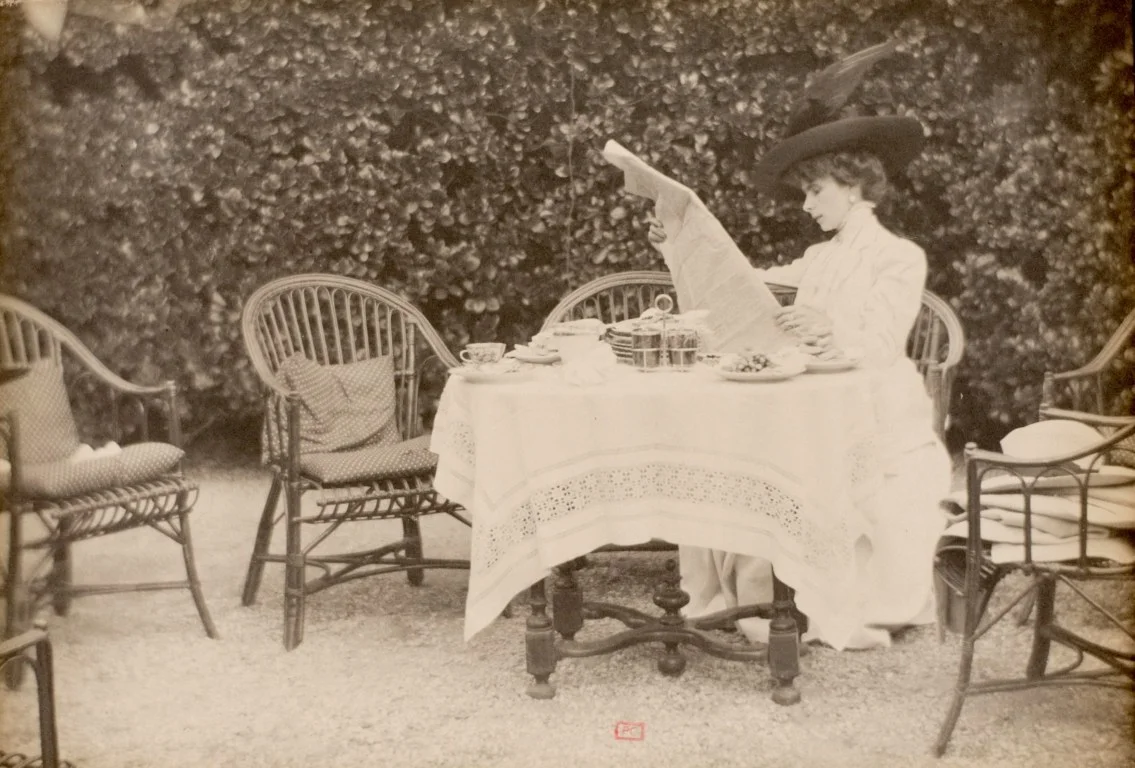
Referenced work : Sun Artists no. 7, April 1891 ; The Summer Garden · April 1891 · Eveleen MyersOfficial work ↗Each photograph links to its portfolio or collection record. Titles, dates and credits are retained when supplied by the source.
The story
Eveleen Myers began photography in 1888 to record her three children's early lives. She later established a studio in the family home, making portraits of contemporaries and genre scenes.
The V&A notes affinities with a Pre-Raphaelite aesthetic encountered in childhood. Her trajectory shows how an initially domestic practice can develop into portrait research. Surviving images reveal attention to posing and constructing presence beyond resemblance alone.
Understanding the work
Examine costume, posture and gentle transitions. Pictorial references appear through the portrait's organization, turning a photographed person into an evocative figure.
Key works and series
Sun Artists no. 7, April 1891 ; Rebekah at the Well ; Rebecca ; Sun Artists no. 7, April 1891 ; The Summer Garden. The collection records provide dates, techniques and provenance for the prints shown.