Joseph Vigier
France
The Pyrenees photographed as a journey.
Explore 2 works ↓Life and work ↓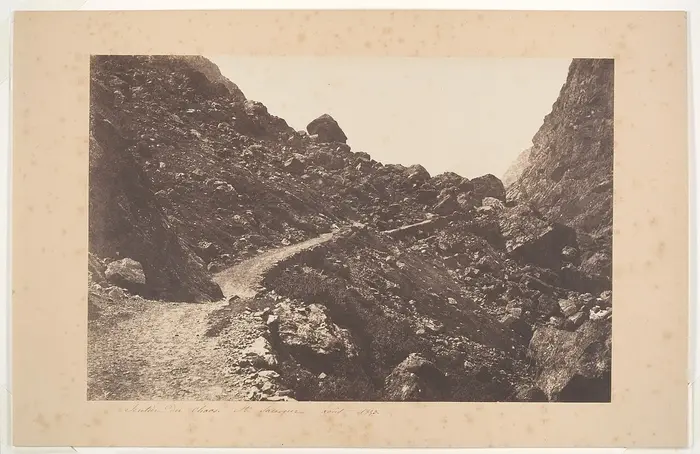
Joseph Vigier · 1853
The Metropolitan Museum of Art · Gilman Collection, Gift of The Howard Gilman Foundation, 2005
CC0 — domaine public · Reuse conditions · Artwork record
A journey through images.
Explore the selection at your own pace. Click a photograph to enlarge it, then move from one work to the next.
Joseph Vigier · 1853
The Metropolitan Museum of Art · Gilman Collection, Gift of The Howard Gilman Foundation, 2005
CC0 — domaine public · Reuse conditions · Artwork record
Each photograph links to its portfolio or collection record. Titles, dates and credits are retained when supplied by the source.
The story
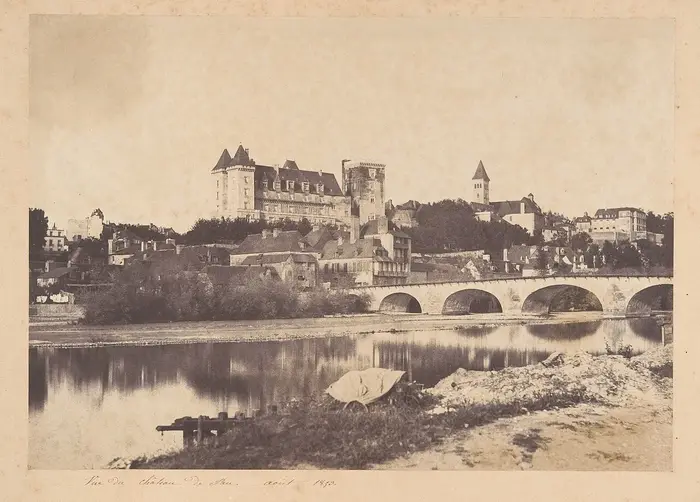
Joseph Vigier belonged to the generation of French amateurs experimenting with paper photography in the mid-nineteenth century. His journey through the Pyrenees in 1853 brought together mountain landscapes, paths and architecture. The views are more than a list of sites: they express a traveller’s progression through different scales of the landscape, from a rocky path to a castle visible above a river.
The selection preserved at the Metropolitan Museum of Art allows two works to be examined: Sentier du chaos, St-Sauveur, Vue du château de Pau. The records identify the following techniques: Salted paper print from paper negative. This information distinguishes the moment of exposure, the process and the preserved object.
Understanding the work
The path leads the eye between rocks; at Pau, the river and bridge organize distance. Compare these two ways of bringing the viewer into the landscape.
Key works and series
Sentier du chaos, St-Sauveur (1853) ; Vue du château de Pau (1853). The museum records specify each print’s process, dimensions, provenance and accession number.