Eugène Druet
1867–1916 · France
Photographing sculpture to renew its perception.
Explore 2 works ↓Life and work ↓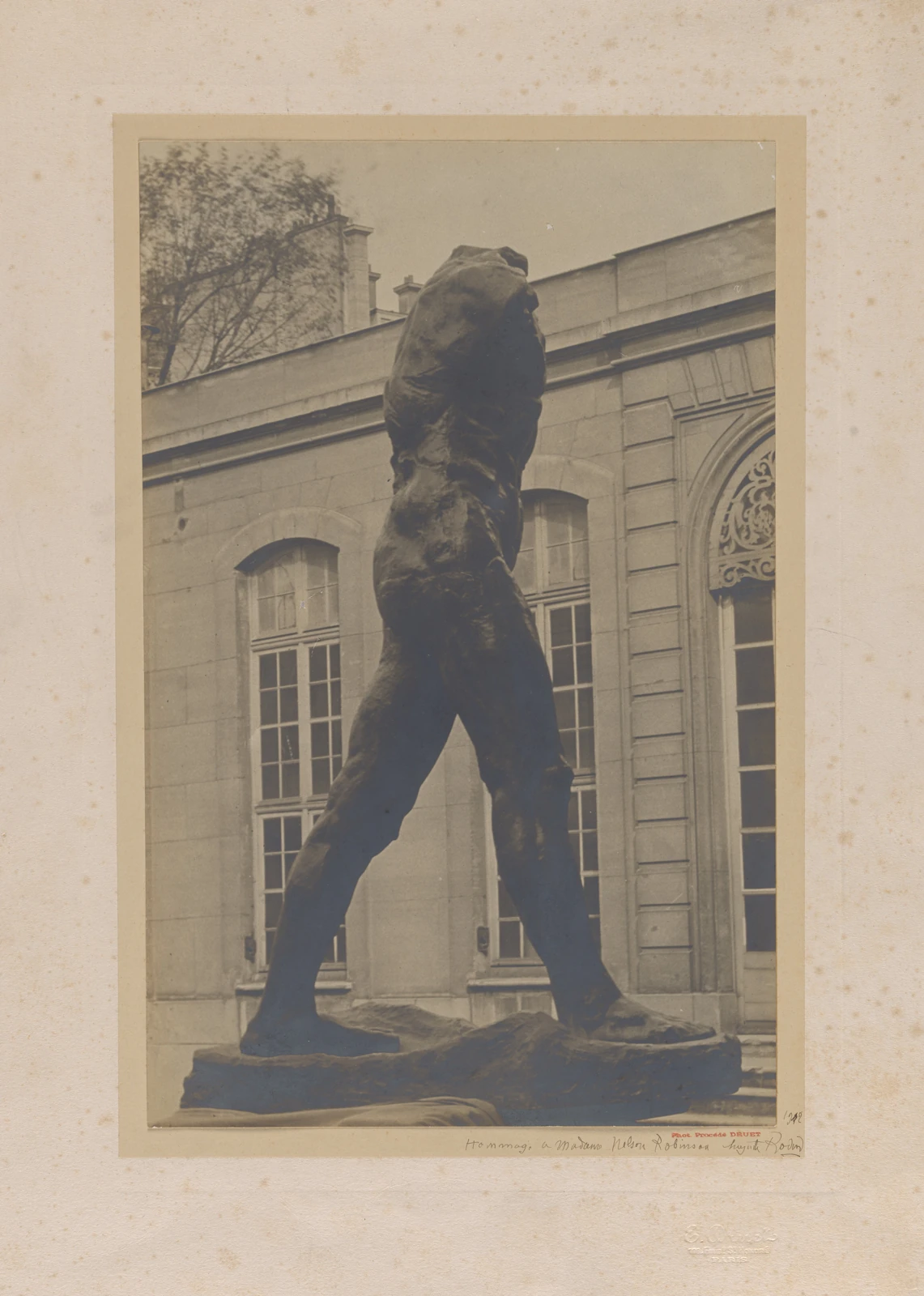
Eugène Druet · 1907–12
Eugène Druet — The Metropolitan Museum of Art. Gift of Miss G. Louise Robinson, 1940, transferred from the Library
Public domain · Met Open Access (CC0) · Reuse conditions · Artwork record
A journey through images.
Available photographs can be enlarged.
Work and source
Referenced work : [Auguste Rodin's The Clenched Hand] · before 1898 · Eugène DruetOfficial work ↗Each photograph links to its portfolio or collection record. Titles, dates and credits are retained when supplied by the source.
The story
Eugène Druet was a photographer and art dealer. His work with sculpture explored how a viewpoint, light and scale of reproduction can transform the reading of an artwork. The images of sculptures by Auguste Rodin preserved at the Met are more than simple records: they give a role to surroundings, details and relationships between solid and void.
The selection preserved at the Metropolitan Museum of Art allows two works to be examined: L'Homme Qui Marche, [Auguste Rodin's The Clenched Hand]. The records identify the following techniques: Gelatin silver print. This information distinguishes the moment of exposure, the process and the preserved object.
Understanding the work
Compare the walking body with the isolated hand. The first interacts with the architecture behind it; the second becomes a landscape of volumes and shadows. Photography offers two different experiences of sculpture.
Key works and series
L'Homme Qui Marche (1907–12) ; [Auguste Rodin's The Clenched Hand] (before 1898). The museum records specify each print’s process, dimensions, provenance and accession number.